Study in Japan: How Much Will It Cost Me Initially?

 In my previous post, I described the process of coming to Japan as a Japanese language student. Now that you have an idea of the "How  to?", let's now talk about the "How much?"


100,000 Philippine Peso bundles of 1000 peso bills Silak Randomness
Will this be enough?


Education, no matter where you are in the world, is expensive. Even more so when you are aiming to study abroad. Studying in Europe averages about 20,000 USD in tuition fees, plus about 4,000 USD for living costs (food, utilities, phone, transportation, etc) per semester. Studying in Japan is no different. 

In a glance, let me give you a simple breakdown as to how much you will need to initially prepare to come to study in Japan.

Tuition Fees

Yearly, language school tuition fees alone will cost about 700,000 yen. The cost will vary from school to school and the length of the program you choose. Take note that this amount does not include dormitory fees yet.

Depending on where you decide to study in Japan, costs do vary from place to place, as well as the size of the school. Most established schools tend to cost more because they are usually located in major cities like Tokyo, Kyoto, and Osaka. 

In my school, Oarai International Exchange Academy (大洗国際交流アカデミー), there are only two programs available: 1.5-year and 2-year courses that cost 940,000 yen and 1,230,000 yen respectively.  *The English version of the website seems outdated and is showing 4 courses, but confirming with the owner, there are only two programs available.

Depending on the school you apply for, you will be required to pay part of your tuition up front. Some schools, they require a year's worth of tuition paid initially. For some, 6 month's worth. 

Initial Tuition Cost: 250,000 yen to 850,000 yen depending on the school.


students walking to school to Oarai International Exchange Academy Silak Randomness
Walking to school saves costs

Dormitory Costs

Most language schools offer dormitories or at least will arrange accommodations for you. Compared to tuition fees, dormitory costs vary widely. Initially, a deposit will be required which can be returned depending on the state of the dormitory by the time you leave. When you leave, there will also be a cleaning cost that usually will be covered by the deposit. 

Initial deposit cost: 100,000 yen to 250,000 yen. *Some schools tuck this into the tuition costs so be sure to ask the school whether this will be paid separately.


School Dormitories
These are typically shared rooms. There will always be a toilet and bath for each room but the laundry and kitchen may sometimes be shared.
Price range: In major cities, the price ranges from 20,000 yen to 60,000 yen a month. For smaller cities, it is a bit cheaper ranging from 15,000 yen to about 40,000 yen a month. 
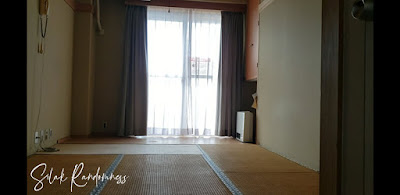

Japanese style bedroom with a large window
Typical dorm room


Private Renting
For those students who prefer to rent their own, it is possible to find your own accommodation. This will usually be for those who are accustomed to a certain way of life and have more spending power. Rent will depend on the location, size, and accessibility of the apartment. 
Price range: Anywhere from 30,000 yen to 100,000 yen a month.

Homestay (Relatives)
Some students prefer to study in a school in the area where their relatives stay. In this case, schools usually allow students to opt to stay with relatives. This would usually prove to be the most cost-effective as relatives tend to charge less (sometimes free) for their stay.
Price range: Depends on your agreement

Cost of Living

When studying abroad, you will have to take every little cost into consideration. When you live at home, you rarely have to worry about food when you get home because the fridge is always accessible. When you get to Japan as a Japanese language student, you can work for 28 hours a week so you will have spending-money but it is advisable to bring two months' worth of food, utilities, and other allowances when you first come to study in Japan. 


Food allowance: 20,000 to 40,000 yen (depending on how lavishly you eat)
Utilities: 30,000 yen to 50,000 yen (depending on what season it is when you arrive)
New phone plan with a new budget phone: 35,000 yen 
Initial health insurance premium payment: 16,000-18,000 yen

Initial budget (two months worth) Total: 125,000 yen


Food
The average cost for a bento box in Japan is about 500 yen. A bento comes complete with rice, a meat dish, and vegetable side dishes. If you are in a pinch, you can opt to buy an onigiri (riceball) instead. They cost about 100 yen apiece. Cup noodles are also available at about 100 yen. You can save the most if you cook at home and bring your own bento (packed lunch). 
Restaurant meals will usually cost you about 1500 yen for a decent set meal.
Price range: Depending on how picky you are with food, a budget of 10,000 yen should suffice. If you are a big eater or if you prefer eating out, set aside a bigger budget.
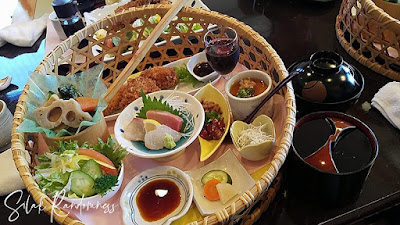
Japanese style sashimi set meal with miso soup in Oarai Silak Randomness
Beautiful Japanese-style set meal

Utilities
Basic utilities are electricity, water, and gas. Utility costs vary per season and hands down, winter is the most expensive. On top of these, you also have internet fees and if you drive a car, you will also have to pay a monthly parking space fee.

Price range: Peak season (aka winter and summer) basic utilities can cost up to 25,000 yen a month. On off-peak seasons you can safely allot 15,000 yen a month. Internet fee averages at 5,000 a month (if you have your own connection) and parking spaces cost about 4,000 yen a month.

Phone
If you have a current iPhone (from the last two years), chances are, all you will need to do is to update your country setting and you are all set. If you're using android, your phone might work with some networks, but it really depends. If you want to check if your phone will work you can use this website. Personally, I think that getting a phone with a plan works the best for Japanese language students because the phone will be tailored to Japanese apps and the provider itself. The cheapest phone plan you can get is around 3,500 yen a month for about 1GB of data. Phone providers also charge a processing fee of about 3,500 yen which will be charged to your first bill. If you aren't picky with your gadget, a budget of 30,000 yen for a new phone is sufficient. But if you're planning to get the latest model, prepare about 120,000 yen.

Price range: New phone plan with a new budget phone: 35,000 yen 

Taxes and Insurances
If you are staying in Japan longer than 90 days, you will be required by law to join the National Health Insurance (国民健康保険) regardless of nationality. 

As a student, you will be paying about 16,000 yen per year. You will have the option to pay monthly or pay it as a whole. It is less of a hassle if you just pay it upfront so you no longer think about it. You will receive a bill in the mail that you will have to pay in a convenience store.

Another bill that you may receive is the National Pension (日本年金機構). Anyone aged 20 to 59 is required by law to contribute to the National Pension System although as a Japanese language student you can apply for an exemption due to the fact that you are not earning a full-time wage. If you do get this, you can ask help from your school to apply for the exemption.

Plane Tickets and Visa Application

The last expense that you will need to consider is travel costs. The biggest chunk is will be the plane ticket. I'm from the Philippines and regular priced tickets are around 30,000 yen. If you're lucky and are able to catch a sale, it can go as low as 10,000 yen. Another cost you have to consider is visa processing fees. From experience, I spent about 6,000 yen for the whole process. In the Philippines, the Japanese embassy does not process direct applications so you will have to go through an accredited agency to process your visa. 

Plane Ticket and Visa Processing: 16,000 to 36,000 yen


Grand Total: Anywere from 400,000 to 1,000,000 yen

This is a rough estimate of how much money you will need to prepare to go to Japan as a Japanese language student. From time to time there are even cheaper options depending on the school. The key is to ask. These schools have been in the business a long time and they may have ways of accommodating you so don't hesitate to ask.

initial cost to come to Japan


Are you ready to study in Japan? Check out my post about part-time jobs Japanese language students can do.

For questions, feel free to comment below or message me on Facebook or Instagram.


,

Part-time Jobs as a Language Student

On our third day in Japan, we started with our very first part-time job or arubaito(アルバイト).

When you come to Japan to study, you will be allowed to work for 28 hours a week to help with your day to day expenses (rent, utilities, food, etc.) At the time, the hourly rate for part-timers in Ibaraki was 800 yen per hour. One good thing about working as a part-timer in Japan is the fact that everyone is paid the same rate. They don't look at age, gender, or nationality. Across the board, the minimum wage is the same.

Update: As of 2020, the minimum wage in Ibaraki is at 850 yen per hour.

There is a multitude of part-time jobs available all over Japan. But if you come here with practically zero language skills, then your options become limited. Let me show you a few of these arubaito gigs that can be done even when you barely speak Japanese.

Part-time jobs Japanese language students can do


Let me tell you our story...

After the school orientation, we were given the rest of the day off. Or so we thought. At around 3pm, (if memory serves) we were told to report to the school's field office. We called this place jimusho(事務所). This is where we would go whenever we needed administrative stuff; work issues, problems with our apartments, payments, or when you accidentally get bit by your neighbor's dog (true story XD), among other things.

So, we were told to go there because they decided what our part-time jobs would be and when we would start work- which was the next day. We were told to buy work boots and hats. Hmmm... what was this job going to be?

The next day.

So we went to school and had our first day of lessons. We were then loaded on to a van to be taken to our very first job. We ate our lunch in the van, en route to our destination. 


Farm Work

Four girls standing in a field of sweet potatoes in Oarai
Sweet potatoes...as far as the eye can see...

We were taken to a large field with exposed sweet potatoes for the picking. Digging the crops are done by a machine but the initial sorting is still done by hand and thus we had to go, pair by pair into the field and pick out the big ones first, and then the smaller ones.


休憩中 - Breaktime

This is one of the jobs available for students who are still at the very basic stages of learning the language. It's hard labor, we all had muscle aches the next day, but it was a very fun day.

Some other farm work part-time jobs in Oarai are:

Harvesting cabbages and other vegetables
Harvesting strawberries

Note: Harvest jobs are typically seasonal. 

Factory Work

The next day, the boys continued with the farm work, and the girls were taken to the factory to help with the packing of the finished products. We were given a white long-sleeved shirt, a yellow apron, and a head covering.

couple of factory part-timers on tea break in Oarai
Guess who???

This is what factory part-timers usually look like, especially the ones working in the food industry. Uniforms vary depending on the work they do. In this factory, we had to arrange the dried sweet potato in a way that it will look beautiful inside the packaging.

Part-timers on the factory production floor in Oarai
Nihongo wakaranai!

Going back to the story

We thought that we would stay with this part-time job till we graduated like most students. But the sweet potato industry only operates in full capacity from autumn through winter. So when spring comes around, they let all their part-timers go. A lot of industries will have peak and off-peak seasons so there is a possibility of needing to change jobs from time to time.

We were then transferred to a different food processing company.

Part-timers in a food processing plant in Oarai
"Why am I always the one holding the camera?"

From sweet potatoes, we moved on to vegetables. We prepared vegetables for restaurants and bento making factories. 
Part-timers processing bellpeppers in a food processing plant in Oarai
"Aren't we supposed to be working?"

Some other factories that employ part-time student workers are:

Fish/Seafood processing plants

Bento (boxed lunch) processing plants

Industrial laundromats


Restaurant/Cafe Staff

The saga continues...

When we were transferred from our sweet potato life, we were divided into two groups. Three of us were sent to vegetable processing, the other three were sent to a seafood restaurant. 

Part-timers preparing dishes in a seafood restaurant in Oarai
Prep time!

Another entry-level job students can get while studying is in restaurants and cafes. When you can't hold your own in a conversation yet, you will most probably be placed in the kitchen where you will wash dishes all-day-long. 

But as you progress with your Japanese language skills, you will slowly, but surely, be introduced to other aspects like taking orders or manning the register.

three part-timers in sailor uniforms working in a cafe in Oarai
And sometimes, you get to wear cute uniforms!

Hotel Staff

Oarai may be a small town, but it does have a number of hotels. Students can get jobs in housekeeping, cleaning, kitchen staff, etc in some of the hotels in the area. 

Part-time student cleaning capsule hotel in Oarai
Do not disturb me!


Other Arubaito

For students who come to Japan with some Japanese skills, you can find other part-time jobs. I listed these jobs for last because most of the time, students come with almost no Japanese language skills. 

Convenience store clerk

Whenever you take a customer-facing job, it will require you to speak and it goes without saying that you will need language skills for this one. I never experienced this myself so I really have no opinion about this.

English Tutor

For those with English speaking skills, you can sideline as an English tutor. The biggest downside to this would be having to find your own students. Although there are a lot of available websites to do this.

Supermarket Staff

This is similar to the convenience store clerk job where you have to man the register. Although sometimes you just need to stock the shelves or put discount stickers on bento boxes two hours before closing.

I'm sure there are other part-time jobs I may have failed to mention here. Not to worry, the key is to be open to any available job and you can't go wrong. Besides, no matter how difficult, it makes for a good experience.

Frequently Asked Questions

Here are some of the usual questions students have. If you have any other questions, feel free to comment below and I will update your questions here periodically.

Q: Can I have more than one part-time job?

A:  Yes. But you still need to abide by the 28 hours per week rule. During long school vacations (golden week, summer vacation, winter vacation, etc), you can work up to 40 hours a week.

Q: Are we allowed to work night shifts? Do we get paid night differentials?

A: Yes. You may work any shift as long as it does not interfere with your class schedule. Yes, the night differential is paid. It's set at 25%.

Q: Do we get paid holiday premiums?

A: Depends on your company. Some pay it, some don't. Same with weekends. It really depends on the company you work for.

Q: How much do you earn a month?

A: Part-time workers earn about 80,000 to 100,000 a month.


What do you think? If you liked this post, read about how a usual day goes in our life as a student in OaraiFor questions, feel free to comment below or message me on Facebook or Instagram.


How I got to Japan as a Japanese Language Student


On the way to JLPT Test Site


If you dream of living in Japan, the first step is to learn the language. Japan is a country where English use is uncommon despite the effort Japan puts into strengthening English proficiency. To enjoy Japan to the fullest, you will need to get a good grasp of the language. And the best way to do this is to be a Japanese language student.


Sometime in late 2015 (if I remember correctly), I saw an ad on Facebook about a study and work program in Japan. I checked it out, attended a seminar, and got application forms and a list of requirements. I submitted my documents and waited for the COE result, which took a couple of months. I passed, paid the processing fees, and I was on my way. 


I studied at Oarai International Exchange Academy (大洗国際交流アカデミー) for a year and a half from October 2016 to March 2018.


Simple right? Now let me break down the steps on how to come to Japan as a Language student


Prep Work

Before making life-changing decisions (like quitting your job and moving abroad thinking you can make a living by doing odd jobs), always do your research. Before deciding to be a Japanese language student, I did my fair share of research before I jumped on board the "Study and Work in Japan" train. I had been researching a way to get to Japan for years(I was desperate to go to Japan, childhood dream, and all) before I finally found the way that fit me the best.


Some things to research:


School or Agency 

There are many language schools all over Japan. Decide where in Japan you would want to study, and research available language schools in the area. Just search for: "Japanese language school in PlaceName." This search should show you the schools in that area. Some students opt to go with agencies, although these usually will cost a little bit extra.

Program Fees

Not all language schools are created equal. Some schools will cost more than others, and this is something you should research on. Spoiler alert: studying in Japan is expensive. So don't be shocked by the figures you see. 


Requirements

For non-OECD countries, the documentary requirements to be a Japanese language student are a bit more strict. It will be best if you do some research on this as well. I will talk more about this in detail below.


Study basic Japanese

"Wait, what?! But this was supposed to be the reason why I am going to Japan to learn the language, right???" Coming to Japan with zero Japanese will be difficult, especially if you chose the countryside area to study. Also, the chances of getting approved for a COE (Certificate of Eligibility) is better if you have credentials showing study time(a certificate showing at least 150 hrs of Japanese language study, or a JLPT N5)


*Special note on age limit: Most language schools will accept students aged 18-30. They prefer that you already have a university degree, but finishing senior high school will suffice. Only university graduates (bachelor's degree holders) can find a job after graduation from language schools.


Find a Sponsor

Studying in Japan can be very expensive. Tuition alone will set you back around 700,000 yen for one year. Adding dormitory costs, utilities, food, and other miscellaneous expenses would bring you up to a total of 1.3 million yen a year. Hence, the Immigration Bureau requires a sponsor who is a family relative and can support the Japanese language student during their stay in Japan. The sponsor would need to show proof of 1.5 million yen bank balance (this is the minimum though most language schools would require 2 million or more).


Application Timelines

Every school has its timeline, this is just a rough estimate of the usual times


Graduation: March


Step 1 - Decide on a School/Agency

After researching schools, you need to decide on which school you would like to apply to. You can then proceed to start the application process one of a few ways:


Apply Directly

Language schools get most of their students from abroad, and more often than not, they will have a direct application link on their website. You will almost always see their application timeline as well. (This can be difficult for smaller schools who are very limited with their English ability)


Apply through Agencies

There are services online offering help with processing documents like GaijinPot Study and Go! Go! Nihon. According to their websites, they offer free services, and you will only pay the fees required by the school.


Apply through a Friend or Family member

If you have a friend or family who's already living in Japan, they can apply to the school directly for you. This method is my preferred way because it's easier to get feedback from both the school and the applicant.


Step 2 - Gather the Required Documents

After the initial inquiry for the application, you will receive a list of required supporting documents. These supporting documents will be used to acquire a Certificate of Eligibility (COE) with the Immigration Bureau. These documents are mostly proof of the ability to pay for your stay in Japan. Gathering documents is time-consuming, and I strongly advise you to gather all the documents you can, as soon as possible. The usual documents required are:


Applicant(Student):

School Application Forms 

University Diploma 

Transcript of Records (the last school attended)

Family Registry (usually your birth certificate should suffice)

Certificate of Employment (for past and current job)

Certificate of Completion (Japanese language study 150 hours or more)

JLPT/JTEST/NAT results (if available)

Health certificate (some schools have this included with their application form)


Sponsor:

Identity document (passport copy)

Proof of relationship with the student (for family members, please prepare documents that show your relationship; birth certificate, marriage contracts, etc.)

Certificate of bank balance (This should be recent, or issued within the last three months, so save this for the end)

Income tax documents for the past three years

Certificate of employment showing annual salary - if currently employed (this also has to be recent)

Letter of guarantee (usually provided by the school)


Step 3 - Submit your Application and Pay the Processing Fee

Some schools will work with you as you gather your documents. There will be a lot of emails back and forth to make sure your application is "wrinkle-free." Schools will usually ask you to scan your filled in application form first so that they can double-check all the details you wrote. Once everything is in order, you will submit the original signed application directly to the school via post or parcel. In addition to this, you will also need to send the processing fee (non-refundable, ranging from around 20,000 yen). Putting together an application for a COE (Certificate of Eligibility) is incredibly time-consuming because everything has to be in Japanese. 


Step 4 - Wait for the COE Approval

COE applications take around three months at the most. This wait time can be extremely nerve-wracking, speaking from experience. While waiting, you can study Japanese, master the kana (hiragana and katakana), and increase your vocabulary. This extra step can help ease the transition when you arrive as a Japanese language student. 


Step 5 - COE Approval and Tuition Payments

Congratulations! You now have your COE, and you are now halfway there! The next step will be to send your tuition payment to your school. Depending on the school and your agreement, you will have to pay anywhere from 6 months worth to a year's worth of tuition upfront. This payment scheme is a safe-guard for the school because many students (especially from southeast Asia) tend to leave midway through school in hopes of getting jobs elsewhere. Requiring the payments upfront ensures the student will stick to the program till graduation. Once the school validates your tuition payment, your COE will be sent via EMS (Express Mail System) or through any other parcel service you choose. You will be paying the shipping fees.


*Special Very Important Note:

If, and when you come to Japan as a Japanese language student, you CANNOT quit midway. You will have to see your studies through graduation to secure a legal job afterward. There are ways around this, but they are ILLEGAL and can result in jail time or deportation. If Japan is your dream, do it right from off the bat.


Step 6 - Visa Application and Ticket Purchase


Once you have your COE, you will have to send your visa application to your country's Japanese embassy. The turnaround time varies per country, but the general average is five working days. You will also get a piece of paper for an application to allow you to work part-time as a student with your COE package. You will submit this application to the immigration desk once you enter Japan. When you get your visa, you can then book your flight to Japan. You will need to inform your school of your flight details to arrange your airport pick up. You will be paying for your ticket as well. 


Step 7 - Come to Japan and Start Your Adventure!

Yokoso! Welcome to Japan! After disembarking your plane, you will go through immigration and get your brand-spanking-new residence card with the stamp at the back showing proof of your permit for part-time work. You are now officially an international exchange student. 


Are you ready for your Japanese language student adventureClick here to read about our first-day-of-school shenanigans.


For questions, feel free to comment below or message me on Facebook or Instagram.