Silak's JST Series: Introduction to Silak's Japan Survival Tips
Hello Everyone!!!
I have been thinking of some things to post and I really wanted to share how I am learning to survive in Japan. Yes, I may have a little bit of Nihongo under my belt but not nearly enough to understand everything that goes on around me.
And so I came up with this!!!
Silak's JST (Japan Survival Tips) series

This will be basically short posts on practical tips and tricks I've picked up along the way. I will be sharing stuff that I learned and am still doing that makes my life so much easier.
This will be anything and everything under the sun from post rescheduling, inquiries, groceries, and many, many more!
And, good news to the introverts out there like me that want to minimize their human contact as much as possible, these, are going to help you a lot! (As much as possible I do most of my stuff online and I only call if, and when I really need to.)
I will try to make the posts as educational as possible with as many picture illustrations as I can.
So as for now, this is all the free time I have, I will keep you guys posted, and please share the word so we can help as many people as we can!

So as our introductory, inaugural post, let's get to our first survival tip
Silak's JST #1: Japan Wi-Fi Auto-Connect
I recently went home to the Philippines for a long-awaited summer vacation. Needless to say, with the little money I saved up for a mini splurge, this homecoming was a success and I successfully gained 3 kgs due to the amount of eating I did while I was there.
On my trip back, as I was fighting back the tears (I guess leaving home is never really easy no matter how many times you do it) I couldn't help but overhear a nice couple (I will be assuming and assume that they are newlyweds as the wedding rings look fairly new) discussing their roaming plans. When we got on board I thought they were frequent fliers to Japan so I didn't really talk their ears off with tips, but for the internet connectivity thing, I knew how hard it is not being connected.
And so I gave them the tip I used to survive the initial days in Japan when I didn't have a mobile wifi device yet. When traveling to Japan, try to download this app (for android users) before leaving the free wifi areas of the airport.
It's called Japan Wi-Fi auto-connect and I have provided links here:
Website
Google Play
Apple App store
Basically, what this does is connect you to available wifi spots (including those that are sometimes locked or requiring logins under the NTT Docomo network) It's a cheaper alternative to getting the rental hotspots from the airport, and if you will be staying longer like us, a means to an end till you can get your own phone plan.
And, it's easy!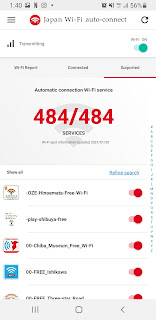
Simply install and register! The app will automatically connect you to wifi hotspots all over Japan.

I have been thinking of some things to post and I really wanted to share how I am learning to survive in Japan. Yes, I may have a little bit of Nihongo under my belt but not nearly enough to understand everything that goes on around me.
And so I came up with this!!!
Silak's JST (Japan Survival Tips) series

This will be basically short posts on practical tips and tricks I've picked up along the way. I will be sharing stuff that I learned and am still doing that makes my life so much easier.
This will be anything and everything under the sun from post rescheduling, inquiries, groceries, and many, many more!
And, good news to the introverts out there like me that want to minimize their human contact as much as possible, these, are going to help you a lot! (As much as possible I do most of my stuff online and I only call if, and when I really need to.)
I will try to make the posts as educational as possible with as many picture illustrations as I can.
So as for now, this is all the free time I have, I will keep you guys posted, and please share the word so we can help as many people as we can!

So as our introductory, inaugural post, let's get to our first survival tip
Silak's JST #1: Japan Wi-Fi Auto-Connect
On my trip back, as I was fighting back the tears (I guess leaving home is never really easy no matter how many times you do it) I couldn't help but overhear a nice couple (I will be assuming and assume that they are newlyweds as the wedding rings look fairly new) discussing their roaming plans. When we got on board I thought they were frequent fliers to Japan so I didn't really talk their ears off with tips, but for the internet connectivity thing, I knew how hard it is not being connected.
 |
| Where art thou, oh Wi-Fi |
And so I gave them the tip I used to survive the initial days in Japan when I didn't have a mobile wifi device yet. When traveling to Japan, try to download this app (for android users) before leaving the free wifi areas of the airport.
Website
Google Play
Apple App store

Basically, what this does is connect you to available wifi spots (including those that are sometimes locked or requiring logins under the NTT Docomo network) It's a cheaper alternative to getting the rental hotspots from the airport, and if you will be staying longer like us, a means to an end till you can get your own phone plan.
And, it's easy!

If you prefer being in control of when you connect rather than automatically connecting to hotspots, you can instead download the sister app, Japan Connected-free Wi-Fi instead.

 |
Both apps are powered by the NTT Broadband Platform and the only difference is the first one connects you automatically once a hotspot is available, and the other one you will have to manually connect.
Although, the downside is, when there are no wifi spots available, you will not be able to connect to the internet and the next thing to do is to look for a convenience store. Most likely, they will always have wifi. But not to worry! The company is adding more wifi spots with time.
This is the first tip I can share and this is usable by all, tourists and first-timers alike! Feel free to share and if you have questions or tips you might want to share, feel free to comment below or message me on Facebook or Instagram so we can all make our Japan stay more fun!
Ja ne~
This is the first tip I can share and this is usable by all, tourists and first-timers alike! Feel free to share and if you have questions or tips you might want to share, feel free to comment below or message me on Facebook or Instagram so we can all make our Japan stay more fun!
Ja ne~


